
3,000+ Homes Mitigated Across Alberta and British Columbia · Guaranteed Results
Radon Mitigation and Testing in Vernon
In the 2024 Cross-Canada Survey of Radon, close to 1 in 3 homes tested in the Vernon area came in at or over Health Canada's radon guideline, and the survey puts Vernon on its short list of Canadian towns where between one quarter and one half of homes reach it. RadonCare's crews test for radon and fix it in homes from Armstrong down to Coldstream and out to Lumby. Questions about a test or a result? Call or text us.
Not tested yet? Start with a test kit →
Got a reading from a library radon detector? Call and talk to a radon expert about what it means for your home.
On this page: Our Results · Radon Levels · Radon Map · Testing · Building Code · FAQ · Free Quote

★★★★★ 4.9
280+ Google reviews

★★★★★ 4.9
on HomeStars


C-NRPP Certified

Consumer Choice Award winner, 2022 to 2026

Partner in radon research led by the University of Calgary
Our Radon Mitigation Work in Vernon and Coldstream
Just a Few of Our Results From the Area
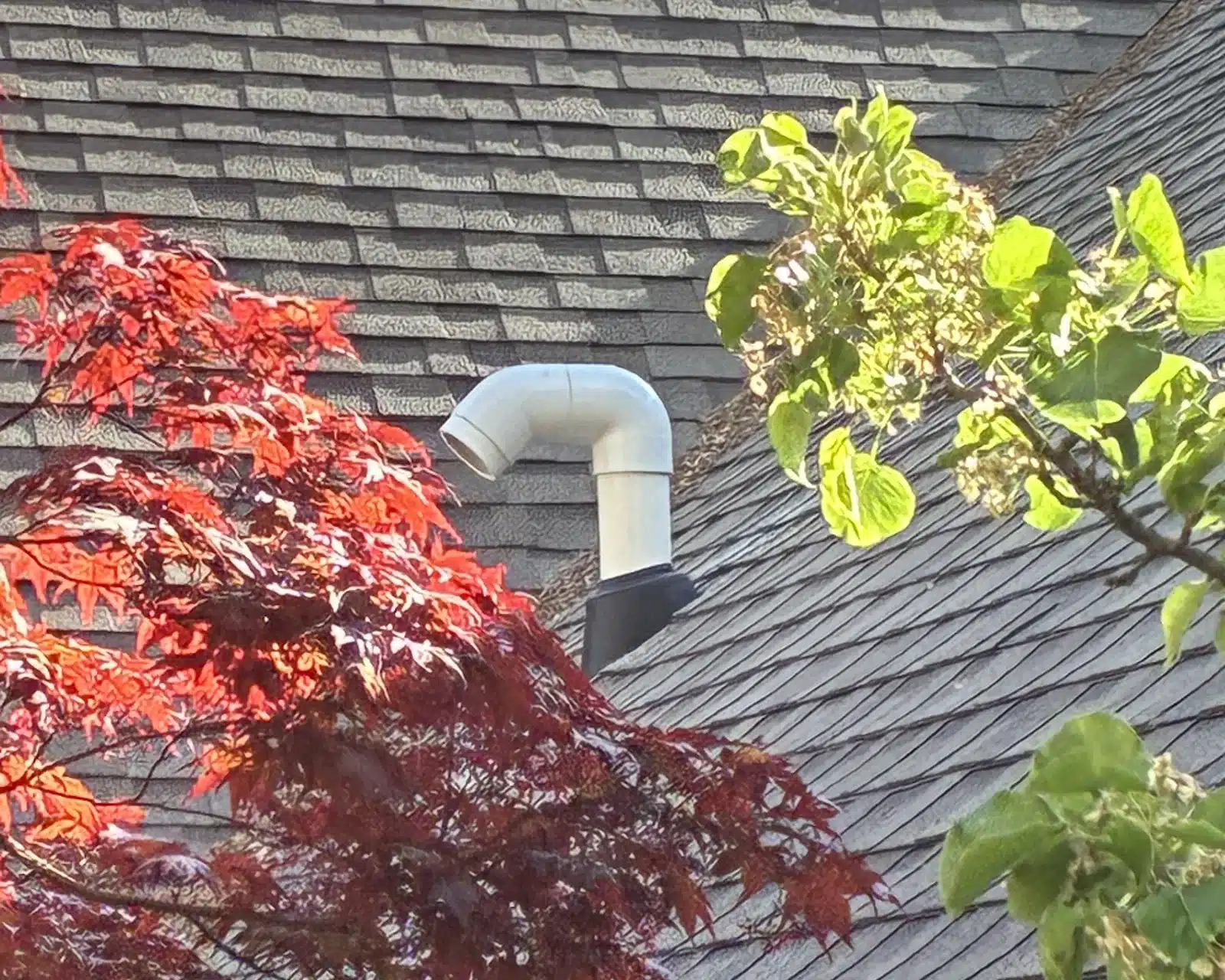
Most of our North Okanagan work is in Vernon and Coldstream, and it spans every kind of home here: 1970s split levels, finished basements with heated floors, houses built on a slab, and crawlspaces with concrete floors. About 3 in 4 of the homes we've fixed around Vernon tested at or above the guideline before we started (our job records).
Each system is designed for the house it goes in. Canada's national standard for radon mitigation (CAN/CGSB-149.12-2024, section 1) says a system that is properly designed and installed by certified professionals can lower radon by about 90% or more. How well a system works comes down to who designs and installs it. We've lowered the radon in every home and commercial building we've ever worked on. Every system we install comes with guaranteed results.
Tricky homes are the ones our technicians enjoy most. Even after more than 3,000 homes, we still run into something new now and then, and when we do, the whole team works on it together, so every job has the experience of all our crews across Alberta and BC behind it.
The Four Homes Below
Before Mitigation
402 to 540Bq/m³
After
16 to 44Bq/m³
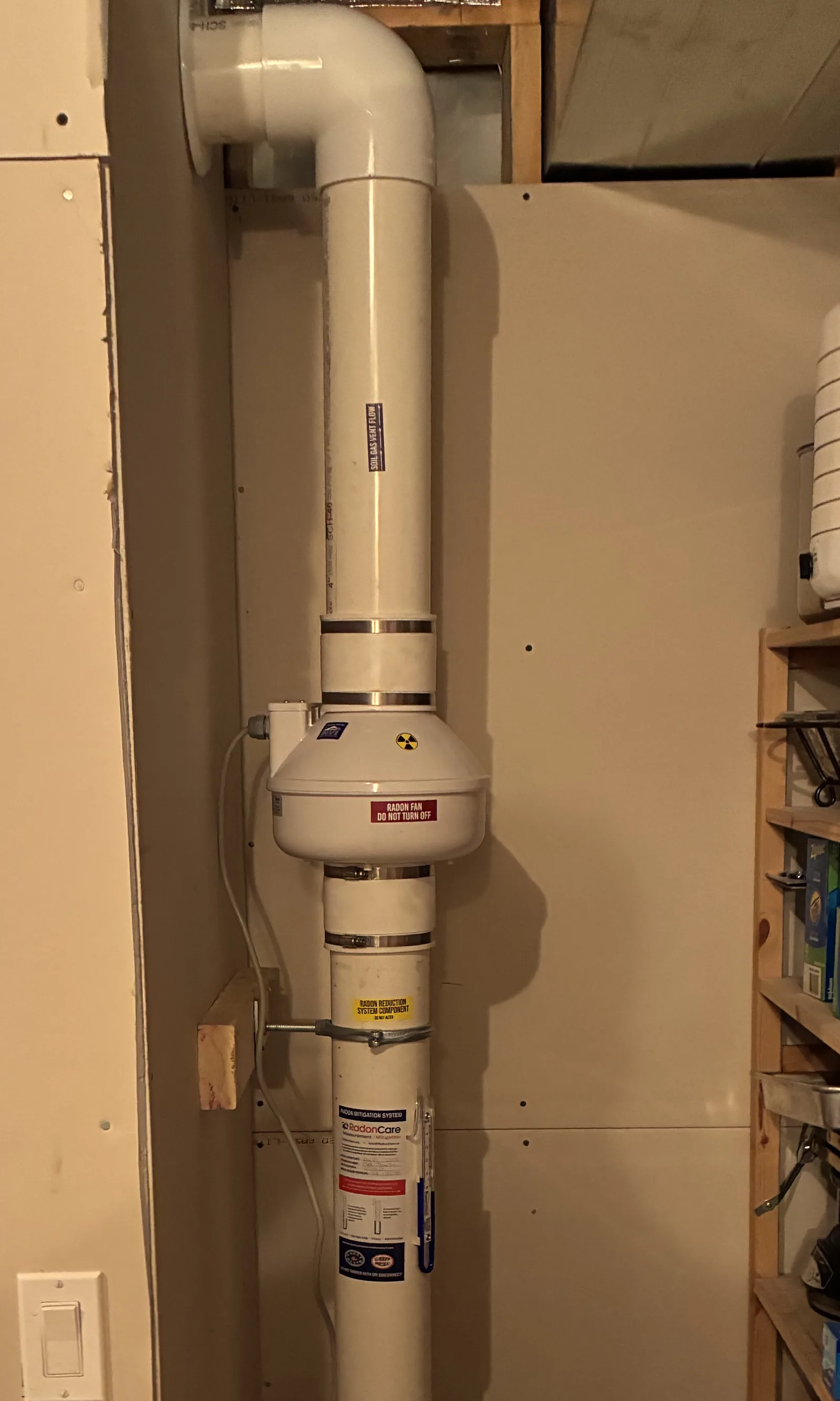
438→16Bq/m³
Finished basement, Coldstream
2010s · finished basement · in-floor heat, a heat recovery ventilator and a builder's capped radon pipe
We scanned the slab for heat lines before drilling and sealed the sump airtight.
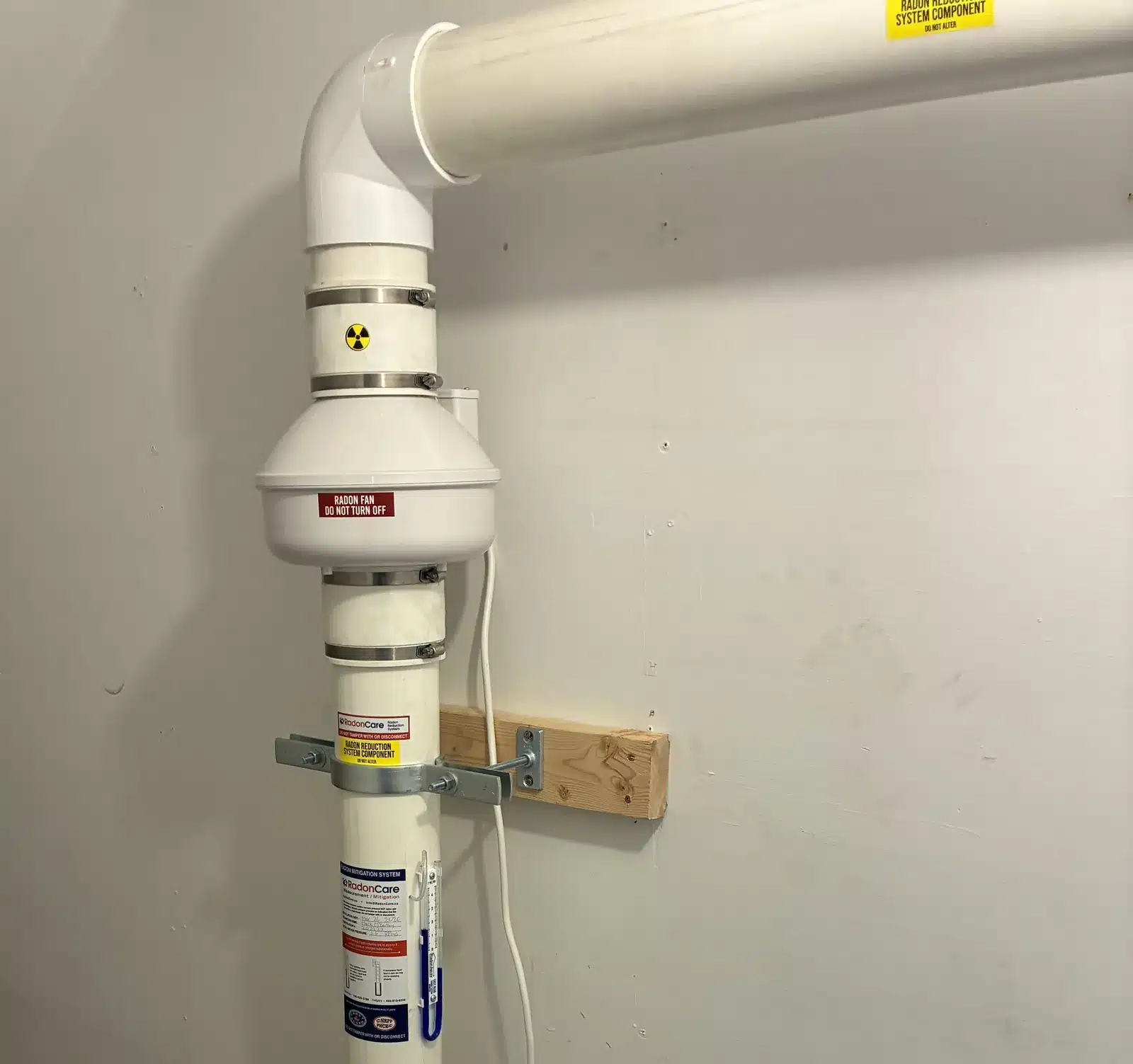
540→16Bq/m³
Slab on grade, Coldstream
Slab on grade · about 1,200 sq ft · sand under the slab
One suction point reached the whole floor, sand and all.
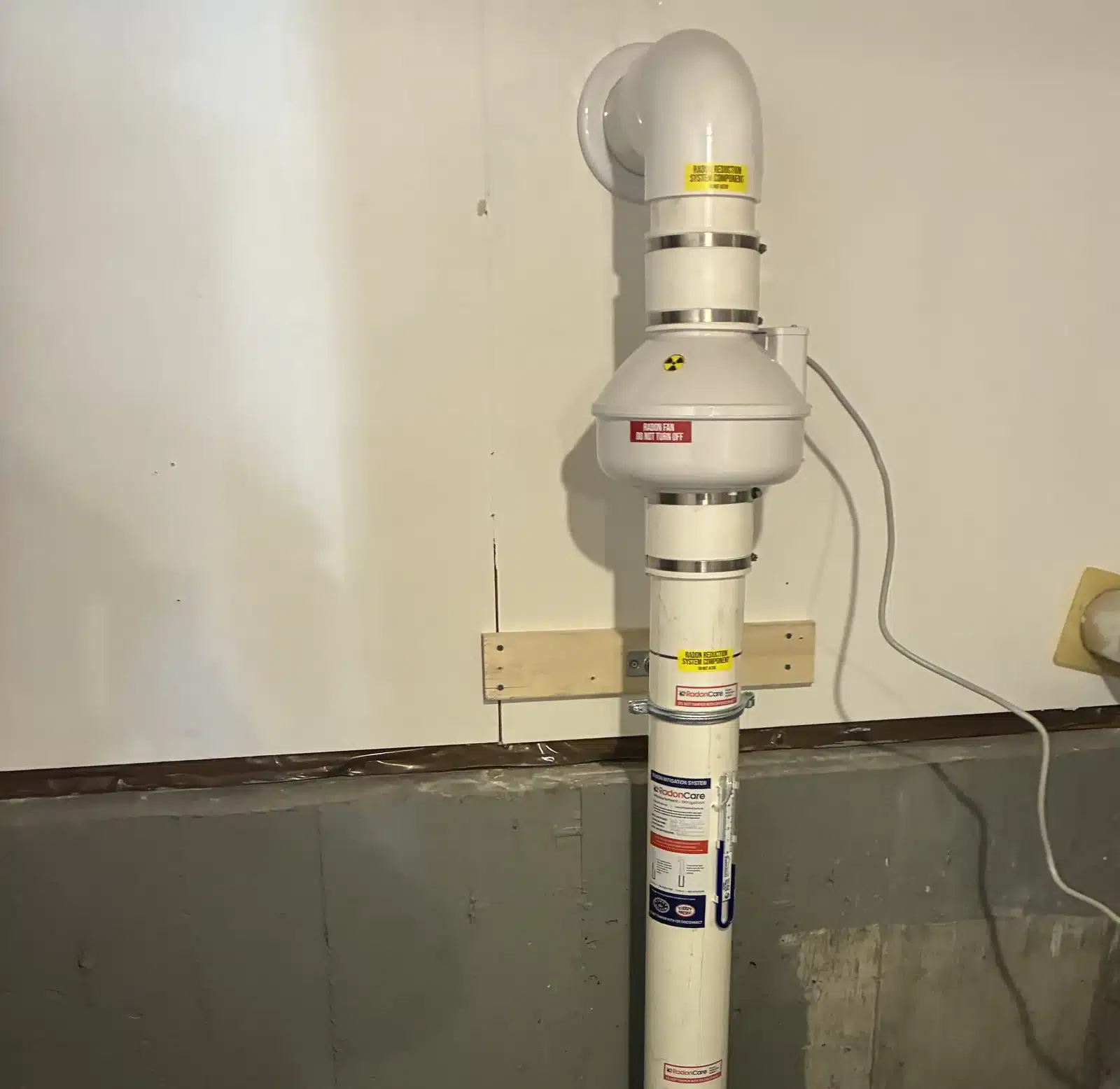
402→21Bq/m³
Split level, Vernon
1970s split level · basement suite · forced air
One system covers the whole house, the suite included.
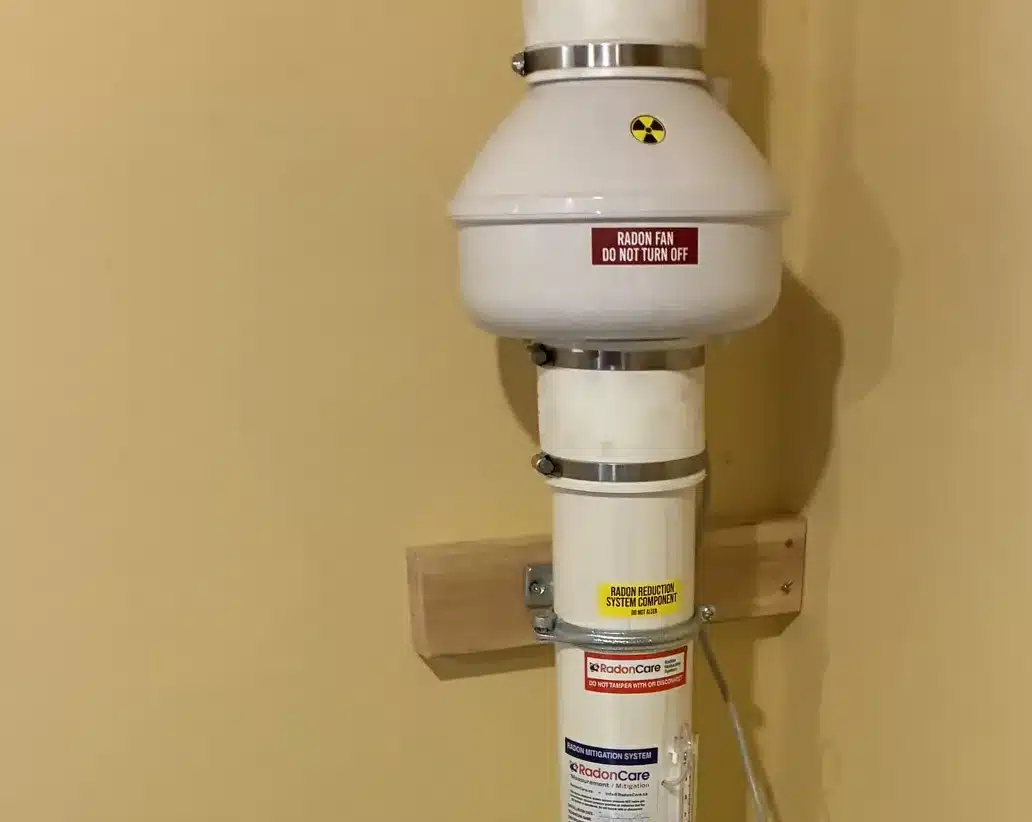
439→44Bq/m³
Basement with a sump, Vernon
2000s · basement · sump
The sump and the floor cracks were sealed before the system went in.
Readings in Bq/m³, before and after, from the owners' own digital radon monitors, read over weeks to months. Home details are approximate to protect each owner's privacy. Photos are from our installs in the area.
Have a result over 200 Bq/m³, or not sure what yours means? Call or text us and we'll talk it through.
Radon Levels in Vernon and the North Okanagan
What Local Tests Have Found
Vernon tests a little higher than the region around it. Across the North Okanagan, about 3 in 10 homes tested reached Health Canada's guideline of 200 Bq/m³ or more. In the Vernon area it was close to 1 in 3, and in the City's own 2020 test kit challenge, more than 1 in 3.
The regional and Vernon-area numbers are from the national 2024 Cross-Canada Survey of Radon, the Evict Radon study at the University of Calgary. Its Vernon area takes in Coldstream as well, and about 6 in 10 homes there reached 100 Bq/m³ or more, the level the World Health Organization uses as its reference. The challenge figure comes from the winter of 2020, when the City handed out free test kits through Take Action on Radon's challenge.
Each of these is a share of many homes. Yours could sit well above or well below it, and only a long-term test in your own home will tell you.
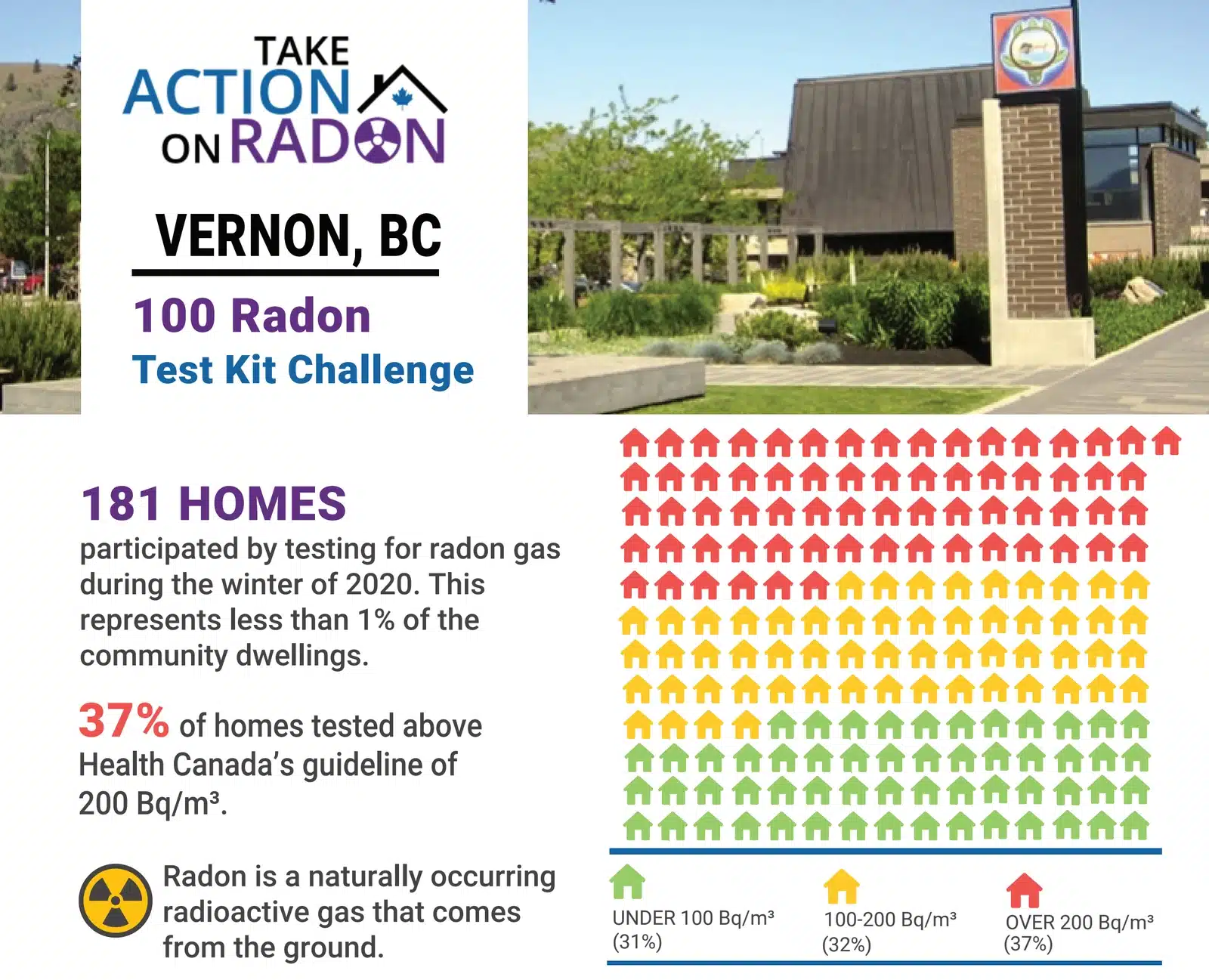
Image: Take Action on Radon, 100 Radon Test Kit Challenge, Vernon (June 2021 report).
North Okanagan: 29% of 921 homes at or above 200 Bq/m³. Vernon area (Vernon, Coldstream and the rural areas around them): 30.7% at or above 200, of between 750 and 799 homes (the survey gives the count as a range), and 62% at or above 100 (2024 Cross-Canada Survey of Radon). City of Vernon challenge: 37% of 181 homes over 200 (Take Action on Radon community report, winter 2020).
What Your Radon Level Means
From Fresh Air to Canada's Guideline
Radon is measured in becquerels per cubic metre (Bq/m³). Here is where a long-term result sits next to the levels that matter in Canada, drawn to scale up to 300.
radoncare.ca
5 to 30
85
100
125
148 US
200
300
How Homes Here Tested
Estimated share of homes in each range of radon levels (Bq/m³), from the BC Radon Map
City of Vernon
Under 100
100 to 200
200 to 600
Coldstream
Under 100
100 to 200
200 to 600
Armstrong and Spallumcheen
Under 100
100 to 200
200 to 600
About 5 to 30Bq/m³
Fresh outdoor air. Radon from the ground gets diluted in open air, and the level changes from day to day and from region to region.
85Bq/m³
The average Canadian home.
100Bq/m³
The reference level the World Health Organization suggests for countries.
125Bq/m³
The average home tested in the North Okanagan.
148Bq/m³
The level where the US Environmental Protection Agency says to fix a home. A US number, shown for reference: Canada uses Health Canada's guideline.
200Bq/m³ (5.4 pCi/L)
Health Canada's guideline. Above it, Health Canada recommends lowering your level within a year, and sooner the higher it is.
300Bq/m³
The upper limit the World Health Organization and European rules set for a country's reference level.
200 is not the goal. Health Canada says no level of radon is risk free, and 200 is not a recommended stopping point if your home can reasonably go lower.
Above 300: How High Radon Can Go
Not Drawn to Scale
800Bq/m³
Canada's guideline from 1988 to 2007, before it was lowered to 200.
4,356Bq/m³
The highest home tested in the North Okanagan in the 2024 survey.
32,321Bq/m³
The highest Canadian home tested in the 2024 survey.
All levels are long-term averages, which is how Health Canada compares a home with its guideline. Sources: Health Canada (200) and its 2012 survey report (800 until 2007), the BC Centre for Disease Control (fresh air, which it puts at about 5 to 15; outdoor levels change from day to day and region to region, so we show a wider band), the World Health Organization and the US EPA (148, for reference), the BC Radon Map (how homes here tested, BC Radon Data Repository estimates), and EU Directive 2013/59/Euratom (100 and 300, for reference), and the 2024 Cross-Canada Survey of Radon (85, 125, 4,356 and 32,321).
Vernon Radon Map by Area
Vernon, Coldstream, Lumby, Armstrong and Spallumcheen
Radon is high across the whole North Okanagan, not in one pocket. Provincial estimates put about 1 in 3 homes over the guideline in Vernon and Coldstream, a little under that around Lumby, and about 1 in 4 in Armstrong and Spallumcheen.
The estimates are from the BC Centre for Disease Control's BC Radon Map, which draws on thousands of home tests gathered in BC's radon data repository. Its areas are broad. The Vernon one covers the city and Coldstream, Lavington included; the Lumby one wraps around them, from the west side of Okanagan Lake out past Lumby to Cherryville; and Armstrong's takes in Spallumcheen.
Very high homes turn up here too: BCCDC estimates that about 1 in 25 homes in the City of Vernon reaches 600 Bq/m³ or more, three times the guideline. Two houses side by side can still test very differently, so test your own.
- Vernon and Coldstream: 33% over 200 (771 tests)
- Lumby and rural areas: 29% (132 tests)
- Armstrong and Spallumcheen: 23% (79 tests)
The same health service areas as the map below. Taken town by town, BCCDC puts the City of Vernon at 33% (570 tests) and the District of Coldstream at 31% (184 tests).
Armstrong, Spallumcheen and Lumby
BCCDC's estimates for these areas rest on far fewer tests than Vernon's. The BC Lung Foundation's 2023 report puts both on its highest-priority list for more testing, as places likely to have more than 1 in 10 homes over the guideline where more tests are needed to say how many.
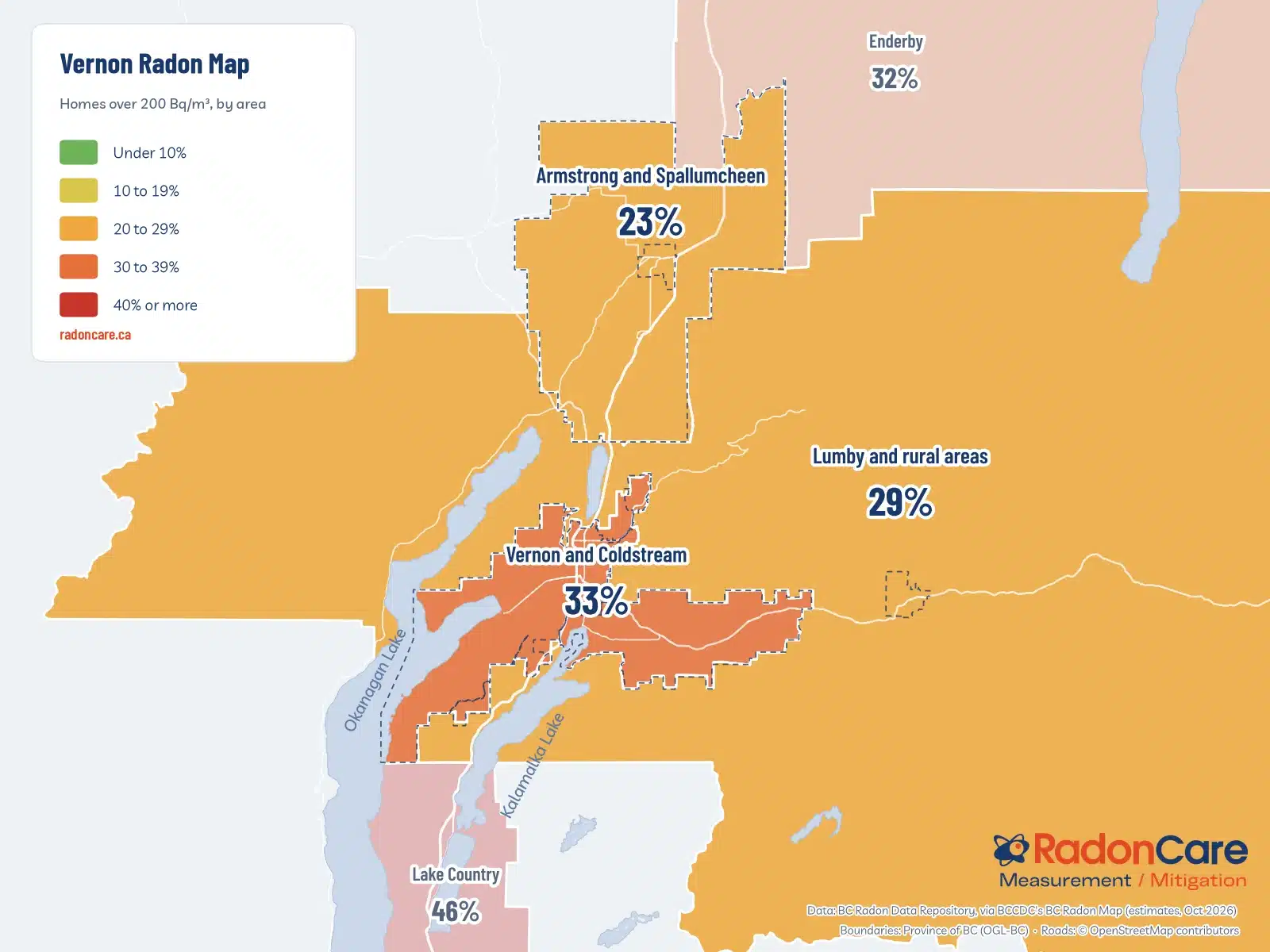
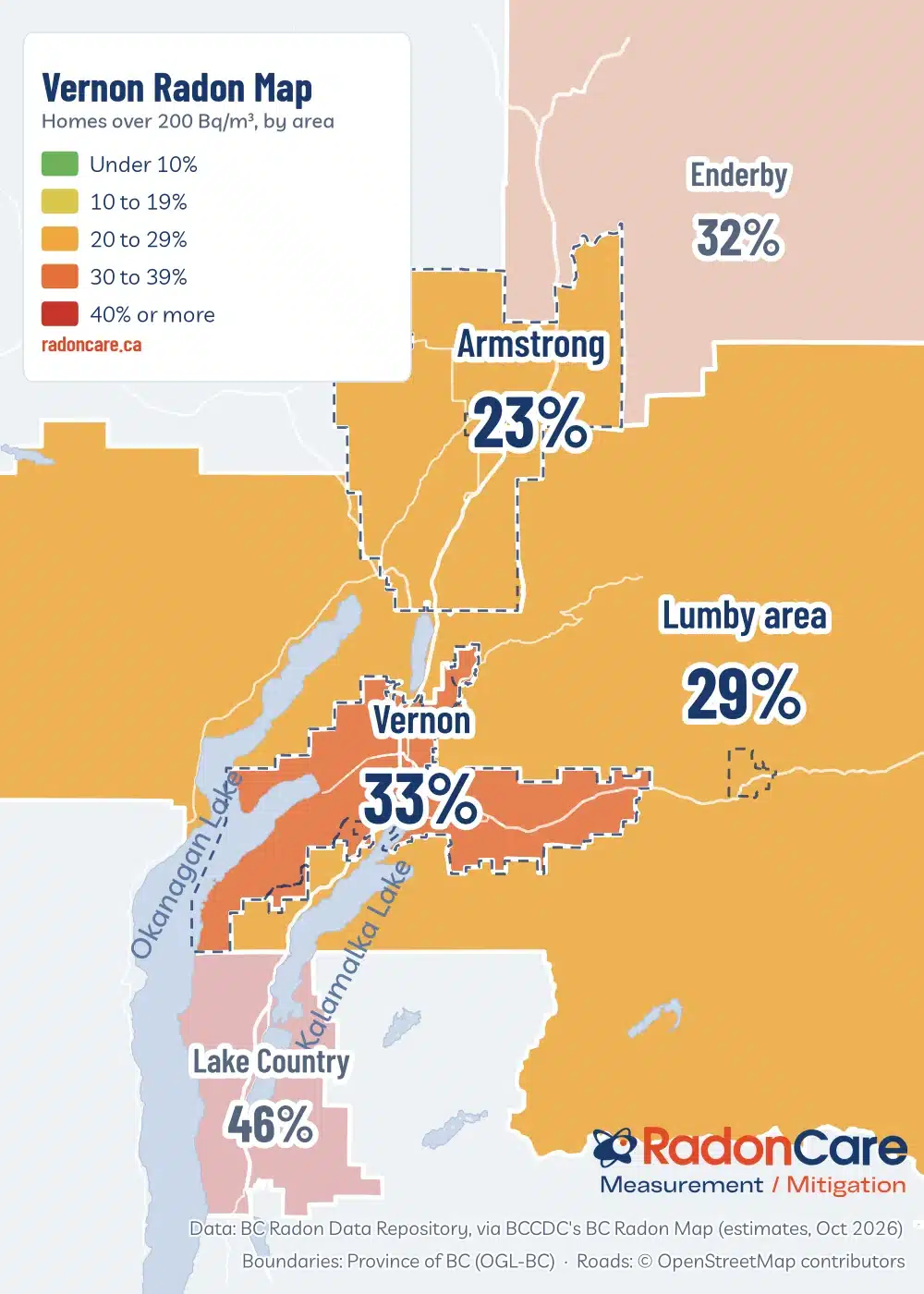
Estimated share of homes over 200 Bq/m³ in each community health service area, with Enderby and Lake Country shown for comparison. Data: BC Radon Data Repository, via the BC Centre for Disease Control’s BC Radon Map (modelled estimates, read October 2026; the live map is there). Boundaries: Province of BC. Our drawing, not BCCDC’s.
Radon Testing in Vernon
The Best Way to Test
The surest answer for a Vernon home is a long-term test. Our long-term test kit is that kind of test, the one Health Canada recommends. Set it on the lowest floor where you spend time, the basement or the suite downstairs, leave it for at least three months over the cold months, then send it back to the lab in its prepaid envelope. If the result comes back high, call us and we'll go through it with you.

Long-Term Radon Test Kit
Lab analysis and a prepaid return envelope included. Free shipping in Alberta and BC.
$54.99
Order a Test KitPrefer to watch your levels on a screen? We also sell digital monitors, like the Airthings Corentium Home. It passed C-NRPP's testing of home radon monitors.

Free Ways to Test Around Vernon
Borrow a detector from the library. The Okanagan Regional Library will lend you a digital radon detector at no charge with your library card, 28 days at a time, between October 1 and March 31, a program the BC Lung Foundation supports. The detectors are shared across the whole region, so look at the waiting list before you count on one, because demand is high in the fall. Holds are placed online, and you pick the detector up at whichever branch you name:
- Vernon, 2800 30th Avenue (the closest for Coldstream and Lavington)
- Armstrong, 3305 Smith Drive (the closest for Spallumcheen)
- Lumby, 2092 Vernon Street
- Nearby: Enderby, Cherryville, Falkland and Lake Country
- The BC Lung Foundation keeps the list of every BC library that lends one.
Free test kits. As of October 2026, we know of no free kit program in the North Okanagan; the City of Vernon ran one in 2020.
Are Free Tests Good Enough?
A library detector or a kit program is a fine first look. Be careful, though, when a company that sells radon systems offers to test for free: a reading taken over only a few days, or a detector in the wrong spot, can make a problem look bigger than a proper test would show. More on short tests and long-term tests.
Schools, Child Care and Home Upgrades
Schools. Interior Health placed radon detectors in every School District 22 building before Christmas 2022, part of a pilot testing schools across the Interior (Castanet). If you're not sure how your child's school tested, ask the school.
Child care. Licensed child care centres in the Interior Health region have been required to test for radon since May 2017 (Interior Health).
Planning an energy upgrade? New windows, insulation and air sealing make a house tighter, and Health Canada advises a new test in the next heating season after work like that (Health Canada). If you're upgrading with help from the City's Retrofit Assist program, put a radon test in the plan. More on energy retrofits and radon.
Why Radon Runs High Around Vernon
Radon is a gas given off as uranium in soil and rock breaks down. The BC Geological Survey finds uranium- and thorium-bearing rock around the edges of the Shuswap metamorphic complex, one of the Interior's oldest rock belts, and names one of those showings east of Vernon.
That is the big picture, not a map of your street. It helps explain why Interior Health puts it at about 1 in 3 homes tested over the guideline in many Interior communities, against about 1 in 113 in Metro Vancouver.
Health Canada names radon as the number one cause of lung cancer in non-smokers. Radon has no symptoms, so a test is the only way to know. For questions about radon and your health, talk to your doctor or call HealthLink BC at 8‑1‑1. More on radon and your health.
“The City of Vernon was identified as an area with the potential for high radon levels in buildings in the 2012 BC Building Code.”
City of Vernon, staff memo to council, October 2020
Vernon-Area Homes and What They Mean for Radon
Crawlspaces With Concrete Floors
About 1 in 4 of the homes we've fixed around Vernon has a crawlspace, often beside a basement, and nearly all of them have a concrete or skim-coat floor rather than bare dirt (our job records). So instead of laying a membrane over the ground, we seal the cracks and pull the radon from under the concrete, just as we would under a basement floor.
Heated Floors
Heated slabs turn up regularly in the Vernon and Coldstream homes we work on, in basements and in houses built on a slab. Before we drill, we scan the concrete with a thermal camera to find the heat lines, so the system goes in clear of them. It adds a step to the work but rarely changes the price.
Hillside Homes and Walkouts
Vernon builds into its hills, and the City's own hillside guidelines ask for foundations stepped into the slope. A stepped or walkout basement is still dug into soil and rock along its back and sides, so radon can still find its way in. Put your test in the lowest level you use, whether or not it walks out.
Townhomes, Condos and Suites
Many Vernon households live in a townhome or condo (City of Vernon Housing Needs Report, 2024), and plenty of houses here have a suite downstairs. If people live or sleep in a basement suite, that is the level to test. The BC Financial Services Authority says a strata owner can test their own unit, and the strata council has to approve any radon work. More on strata, townhomes and renters.
Silver Star and Lake Cabins
A ski condo at Silver Star or a cabin on Kalamalka, Swan or Okanagan Lake may sit empty for months at a time. Test it during the season you actually use it. Radon matters while you're there, and a closed-up place, with no one opening doors or running the furnace, reads differently from one with people in it.
Wells in the BX, Lumby and Spallumcheen
Most homes in Vernon and Coldstream are on Greater Vernon Water, but out in the BX, around Lumby and across Spallumcheen's farmland, many homes have their own well (BC well registry). In a 2024 national study, researchers at the University of Calgary found higher radon in rural homes, much of it linked to drilled wells nearby. Living out of town doesn't mean lower radon, so test.
Where the Radon Fan Is Installed
Vernon's winters come in at about 3,600 heating degree days, a measure of how cold a winter is where a lower number means a milder one (BC Building Code 2024, Table C-2). That is mild enough that Canada's radon mitigation standard (CAN/CGSB-149.12-2024) would let a fan sit outdoors. We still install it in a heated space, usually a basement, a utility room or a heated garage, where it lasts longer, runs quieter and stays out of sight, and only go outside when a home really needs it.
What We Find Under Vernon Floors
Sand is the fill we find most often under floors around Vernon: it is ticked on more than half of our job reports. Clean gravel has taken a standard fan every time. Sandy ground, often damp, is what sends about half of those jobs to a stronger fan or extra suction points. Only about 1 in 10 of the homes we've fixed here has a sump pit. Why the fill matters: how a radon system works.
Radon and the Building Code in Vernon
Rough-In Rules for New Homes, Year by Year
Vernon was added to the radon areas named in the BC Building Code in December 2012, so a Vernon home the builder applied to build after that ought to have been built with a radon rough-in. Coldstream, Armstrong, Spallumcheen and Lumby were never on that list, so for them March 2024 is the date we can be sure of.
When Rough-Ins Became Required
Vernon, Since
2012
Rest of the North Okanagan
2024
Fan Required by Code
No
Code Dates for Vernon
- December 20, 2012: the code names Vernon a radon area. New homes need a bed of clean gravel beneath the slab, a barrier to keep soil gas out, and a radon pipe set through the floor with a cap on it indoors (BC government bulletin B14-07).
- December 19, 2014: the cap comes off. The pipe now has to rise through the house to an outlet outdoors, still with no fan (B14-07).
- December 10, 2018: the next edition of the code lists Vernon where a rough-in is "Required"; the pipe rule carries over, and there is still no fan (bulletin B18-04).
- March 8, 2024: the rule reaches every new home in BC, Coldstream, Armstrong, Spallumcheen and Lumby included, with a sturdier pipe and space kept for a fan. A fan still isn't required (bulletin B24-03-R).
If You Own a Newer Home
The dates follow when the builder applied to build, not when the house was finished, so a house completed in 2013 could still have been built under the earlier rules. In the towns the code's tables never named, a home from 2013 to early 2024 may or may not have a rough-in, depending on how the rules were applied there. Look for a labelled pipe in the basement, and test either way.
A builder's pipe gives us a head start, but it isn't a working system on its own. Every newer home we've fixed around Vernon that came with one still needed a fan before its level got as low as the owner wanted. And when the BC Lung Foundation inspected builders' rough-ins in 89 newer Interior homes for a 2022 study, 20 of them in Vernon, it found that the vast majority had significant flaws that would hold a radon system back, and about 1 in 4 had no room left to add a fan. If yours has a pipe, we check that it works before we build on it. More on radon in the BC Building Code.
Radon in BC: The Bigger Picture
The parts of the radon story that don't change from Vernon to Victoria, like reading your result, the way a system works, what moves the price and the rules when you buy or sell, are on one page: What your level means · Radon and your health · How mitigation works · What changes the price · Grants and help paying · BC code history · Buying or selling · More radon questions
Vernon Radon Questions
Is Radon a Problem in Vernon?
Yes, more than in most of Canada. In the 2024 Cross-Canada Survey of Radon, close to a third of Vernon-area homes reached Health Canada's guideline of 200 Bq/m³ or higher, and more than 1 in 3 did in the City's 2020 test kit challenge (Take Action on Radon). A long-term test is how you find out where your own home sits.
Which Areas Around Vernon Have the Most Radon?
By BCCDC's estimates, the Vernon and Coldstream area comes out highest (33% of homes over 200 Bq/m³), then the Lumby area (29%), with Armstrong and Spallumcheen lower (23%), though fewer homes there have been tested. Taken on its own, the City of Vernon is also at 33%. Every one of them has homes well over the guideline. See the Vernon radon map.
Have Vernon Schools Been Tested for Radon?
Yes. Interior Health put radon detectors in every School District 22 building in late 2022 (see Testing above).
My Vernon Home Was Built With a Radon Pipe. Should I Still Test?
Yes. A Vernon home the builder applied to build after December 2012 should have the pipe, but no version of the code has asked for a fan, and every newer home we've fixed around Vernon that had one still needed a fan to get as low as the owner wanted. Test the house first. If it reads high, we check the pipe works before we use it.
Are There Free Radon Test Kits in Vernon?
Not this year, as far as we know. The City of Vernon gave out free kits in 2020, and we know of no North Okanagan program running in 2026. You can borrow a detector from the Okanagan Regional Library from October to March, or order our long-term test kit, which ships free in BC.
I Have a Cabin or Ski Condo Near Vernon. When Should I Test It?
While you're using it. A place that sits closed up reads differently from one with people in it, and the radon that matters is the radon while you're there. Leave a long-term test running through the season you stay.
Do You Work in Coldstream, Armstrong and Lumby?
Yes, and in Lavington, Spallumcheen, the BX, Okanagan Landing and Silver Star. Heading south toward Lake Country, see our Kelowna page. If you're not sure we cover your road, call us.
How Much Does Radon Mitigation Cost in Vernon?
A radon system costs less than installing air conditioning. What it costs depends on the house: around Vernon, a crawlspace or the sandy fill we often find under floors can change the work. With a few details, we can often give you a quote during that first call. See what changes the price.
Why Doesn't RadonCare Offer Free Radon Tests?
Because we want the test done right. A proper test runs for at least three months in the lowest lived-in level of your home, and we only recommend a system when a test shows your home needs one. For a free first look, borrow a detector from your library, then follow up with a long-term test.
Is There a Grant for Radon Mitigation in Vernon?
At the time of writing (October 2026), there is no BC, regional or city grant. The Canadian Lung Association's Lungs Matter program can help if you have been diagnosed with lung cancer, or your household has a low to moderate income. Anything we missed? Let us know. See grants and help paying.
Areas We Serve Around Vernon
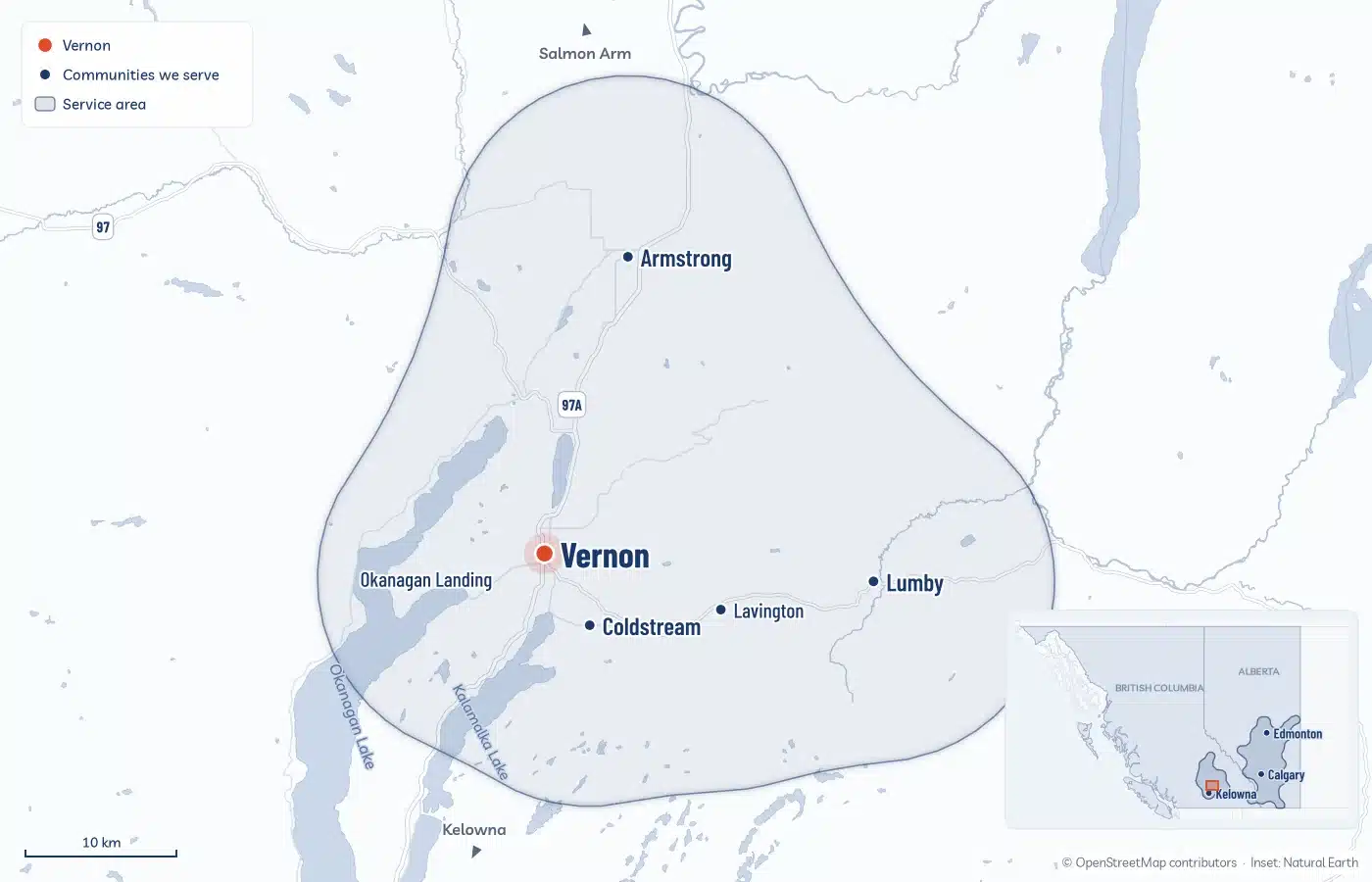
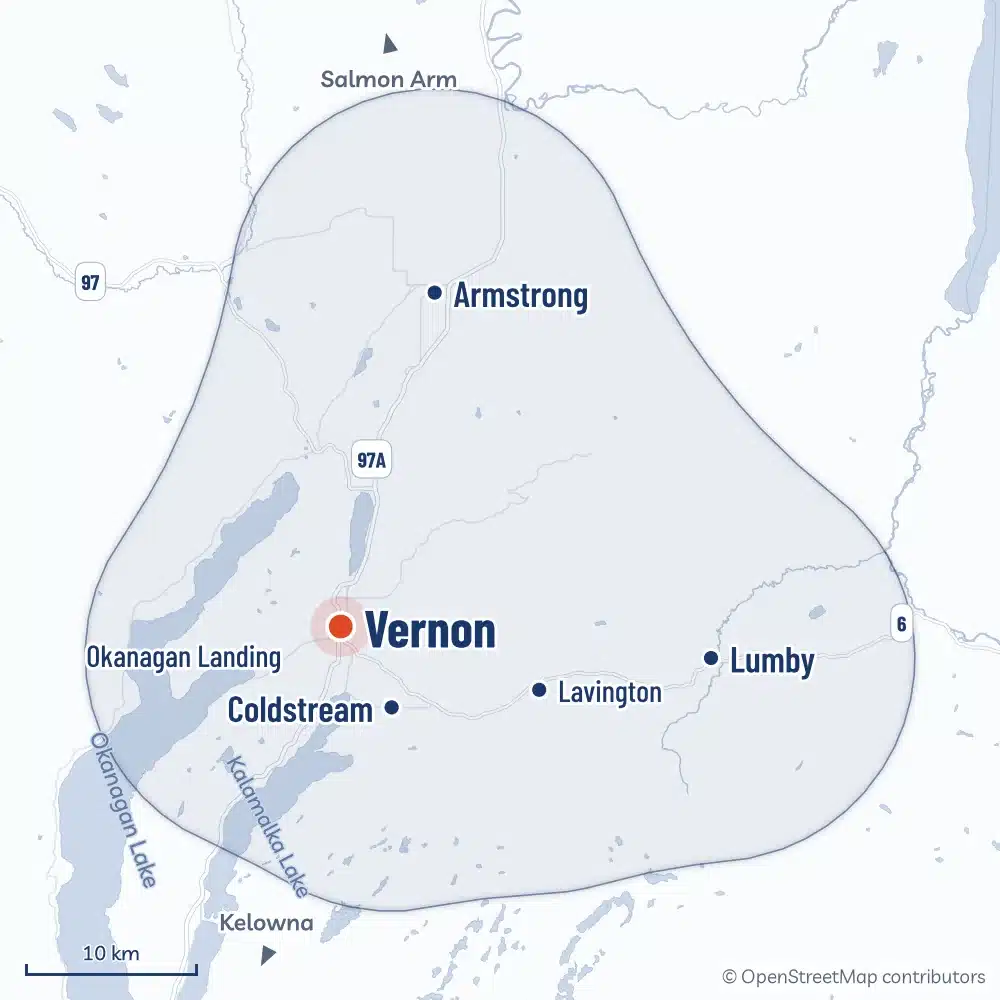
We work in Vernon (including the BX, Okanagan Landing, Swan Lake and Predator Ridge), Coldstream and Lavington, Armstrong and Spallumcheen, Lumby and Silver Star.
Nearby Areas We Serve
Outside This Map? We Work Across the BC Interior and Alberta.
Our crews also work in West Kelowna, Kamloops and Revelstoke, and across Alberta. Not sure about your town? Call or text 236‑300‑7223.
Radon in the Local News
The Tyee, January 9, 2026Homeowners Left on Their Own to Deal with Deadly GasThe Tyee interviewed one of RadonCare’s founders for this story on radon in BC, and one of the homes in it, near Vernon, is one of ours.
Castanet, January 25, 2023Health authority checking Okanagan schools for radon gas
Vernon Matters, November 5, 2021Indoor radon gas levels for 27 per cent of Vernon classified as 'medium': BCCDCWhen BCCDC's radon map launched, its 'medium' band meant 200 to 600 Bq/m³, already over the guideline.
Vernon Morning Star, October 26, 2020Vernon takes on Radon Challenge
Get a Free Quote or Ask a Question
Fill out the form and a radon expert will get in touch to answer your questions. Prefer to talk? Call or text 236‑300‑7223.
About RadonCare
We've lowered the radon in every building we've ever worked on: more than 3,000 homes across Alberta and British Columbia, plus schools, apartment buildings and government buildings. We started out in heating and ventilation, so our team of C-NRPP certified professionals designs every system from how air actually moves through your house, and we aim for the lowest level your home can reasonably reach, not just under the guideline. From your first test to a system built for your home, the results are guaranteed. RadonCare is a five-time Consumer Choice Award winner, and we're involved in Canada's radon industry, with seats on the CARST board of directors and the C-NRPP advisory board.
Updated October 2026